

What is Structured Cabling? A Guide for Caribbean Business Owners
If your business is experiencing mysterious slowdowns, planning an office expansion, or preparing to adopt new technology like AI tools or cloud systems, there’s one conversation you need to have first—and it’s probably not the one you’re thinking about.
Before you blame your software, upgrade your computers, or call your IT provider for the third time this month, let’s talk about the invisible foundation that either enables or sabotages everything else: your structured cabling system.
So, What Exactly Is Structured Cabling?
Think of structured cabling as the circulatory system of your business. Just as your body needs arteries and veins to deliver oxygen everywhere it’s needed, your business needs a comprehensive network of cables to deliver data throughout your organization.
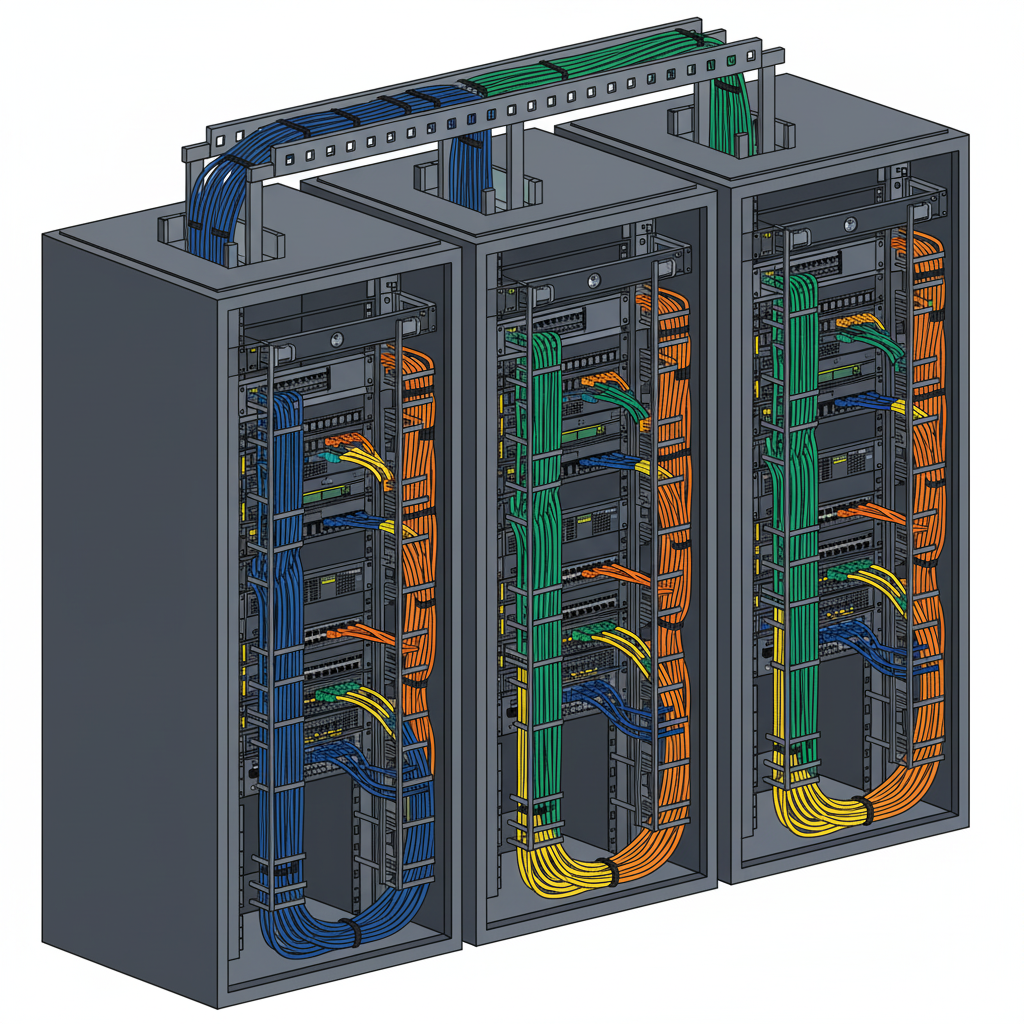
Structured cabling is a standardized approach to building your entire telecommunications infrastructure. Instead of a tangled mess of cables added one at a time whenever you need to connect something new (we call that “point-to-point” cabling), structured cabling creates an organized, scalable system that supports all your voice, data, video, and other communication needs through a single, unified architecture.
A proper structured cabling system includes:
- Horizontal cabling that runs through your office spaces
- Vertical cabling (or backbone cabling) that connects different floors or buildings
- Work area outlets where employees connect their devices
- Telecommunications rooms where equipment is housed
- Patch panels and patch cords that make the whole system flexible and manageable
The “structured” part means it follows industry standards (like TIA/EIA-568), ensuring your infrastructure will work reliably and support future technology upgrades.
Why Should Caribbean and Latin American Business Owners Care?
Here’s the reality we see every day across the region: businesses invest in expensive software, cloud migrations, or AI tools, expecting transformational results. Instead, they get frustration. The technology works perfectly in the demo but crawls in your office.
The problem? Your infrastructure can’t deliver what your applications need.
In the Caribbean and Latin American markets, we face unique challenges. Many office buildings were constructed before modern data demands existed. The tropical climate puts additional stress on cable systems. And with limited local technical expertise for infrastructure work, problems often go undiagnosed for months while productivity suffers.
Benefits That Actually Matter to Your Bottom Line:
Reliability You Can Count On: When structured cabling is done right, you eliminate 70-80% of the network problems that plague businesses. No more mysterious outages that cost hours of productivity.
Future-Proofing Your Investment: Technology changes fast, but good structured cabling lasts 15-20 years. When you upgrade from basic software to AI-powered analytics, or from local servers to cloud computing, your cabling infrastructure can handle it without a costly retrofit.
Scalability for Growth: Planning to hire five more people? Opening a second office? With structured cabling, adding capacity is straightforward instead of requiring a complete network overhaul.
Faster Everything: Modern applications—especially video conferencing, cloud file sharing, and AI tools—need serious bandwidth. Proper structured cabling ensures your network can actually deliver the speeds you’re paying your internet provider for.
Lower Total Cost: Yes, structured cabling costs more upfront than the “add cables as we go” approach. But when you factor in reduced downtime, fewer emergency IT calls, and not having to redo everything in three years, the ROI is clear. Our clients typically see payback within 2-3 years through reduced operational issues alone.
The Modern Technology Connection
Here’s where this gets critical for businesses adopting modern technology:
AI and Machine Learning: If you’re exploring AI tools for customer service, data analysis, or operations, these applications are bandwidth-hungry beasts. They’re constantly sending large datasets back and forth. Inadequate infrastructure means your AI processes that should take 30 minutes might take 4 hours—or fail entirely.
Cloud Computing: Moving to Microsoft 365, Google Workspace, or cloud-based business systems? Your experience will only be as good as your ability to send and receive data quickly and reliably. Poor infrastructure turns “instant cloud access” into “endless loading screens.”
Video Collaboration: Since 2020, video calls aren’t optional anymore. But nothing says “unprofessional” like constantly freezing, dropping calls, or having to turn off your camera because your bandwidth can’t handle it.
IoT and Smart Building Systems: Modern businesses use connected devices for everything from security cameras to environmental controls. Each device needs reliable network connectivity that structured cabling provides.
Common Scenarios We See
The Outgrown Office: You started with five people in a small space. Now you have twenty, and everyone’s experiencing slow network speeds, especially in the afternoon when everyone’s online. Your original cabling setup simply wasn’t designed for this load.
The Expansion Problem: You’re taking over the adjacent office suite—fantastic news! But connecting it to your existing network reveals that your current setup is a tangled mess that can’t easily extend to the new space.
The Technology Investment That Disappointed: You paid for high-speed internet and modern business software, but performance is still terrible. The bottleneck isn’t your internet connection or the software—it’s the cable infrastructure that can’t deliver the bandwidth from point A to point B inside your own office.
What Should You Do?
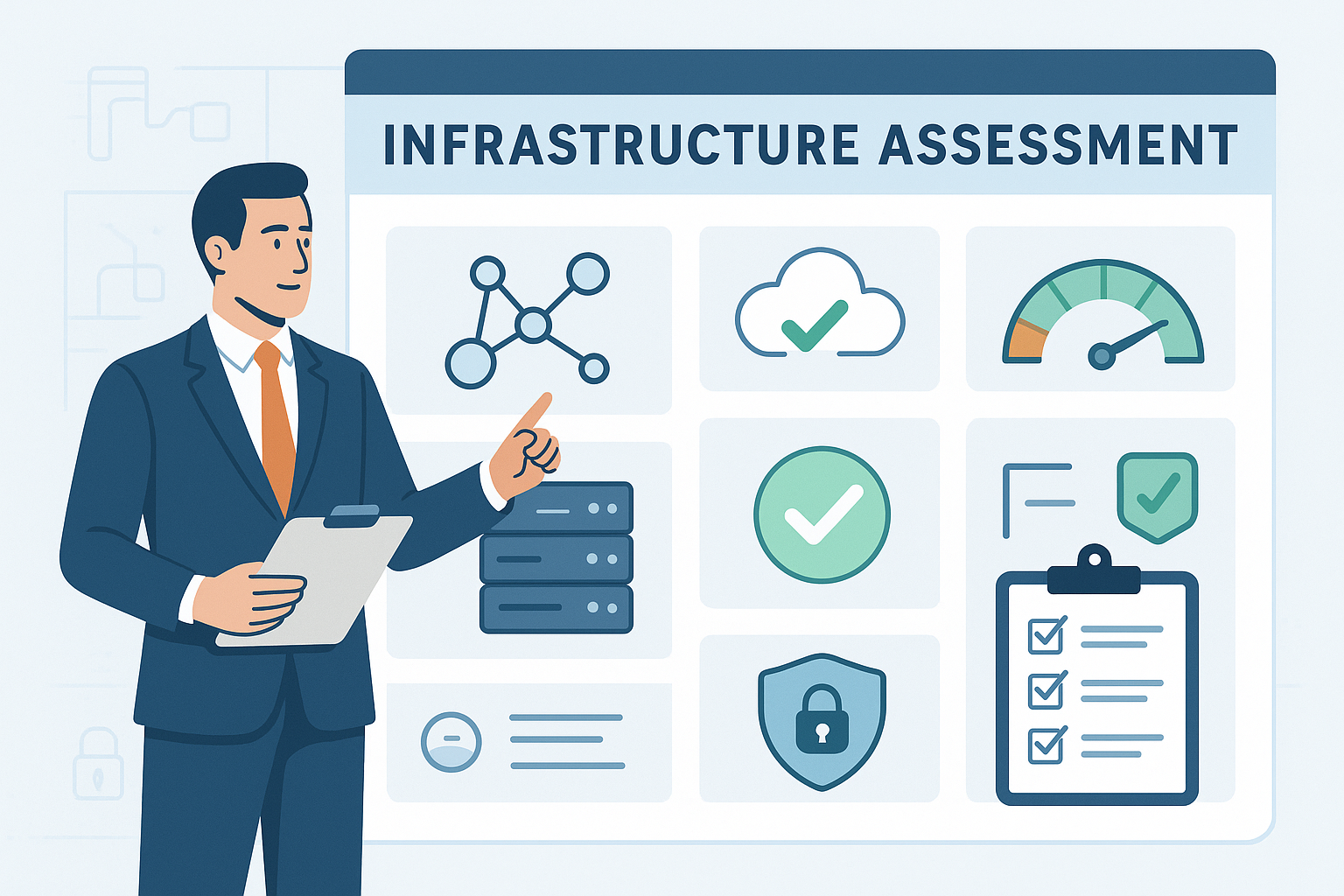
If you’re experiencing any of these issues, or if you’re planning any significant technology initiatives or office changes, it’s time for an honest infrastructure assessment.
The good news? You don’t have to figure this out alone. A proper evaluation will tell you exactly where your current infrastructure stands, what it can and cannot support, and what investments would actually deliver ROI for your specific situation.
Sometimes the answer is “you’re fine for now.” Sometimes it’s “you need a complete upgrade.” But the worst answer is “we don’t know”—because that means you’re planning your technology future on an unknown foundation.
Ready to find out if your infrastructure can support your business goals? Get a free, no-obligation assessment of your current capacity and technology readiness. We’ll evaluate your setup and give you honest answers about what you need—even if the answer is “you’re fine for now.”
Contact us today to schedule your infrastructure assessment and stop letting invisible problems hold your business back.